
Union County Weekly Arrest Records
The sheriff posts no weekly online blotter. For multi-day Union County arrest coverage, the best documented source is the Union County News Leader. Its older issues carry blocks headed "Union County Jail ARREST RECORDS" with a printed date range. General Sessions court records sit in a separate block. That keeps bookings and court outcomes apart.
The 2019 issues show weekly windows from February 21 through 27, April 4 through 10, March 14 through 20, and January 24 through 30. Those dates prove the historical format only. They promise no current publication day. The homepage still says the weekly paper runs court and arrest records. The e-edition stays behind a subscriber login.
The News Leader is a local paper, not a live custody system. Confirm any entry with the Union County jail or records office.
Read the Union County Blotter
Start with the reporting dates. Then match the person using more than a name. Weekly arrest lists often print a town, an age, and the charge as reported. Those details narrow the field, but a booking number or court case number is what pins down the record.
- Open the current newspaper archive or e-edition and locate the issue covering the relevant dates.
- Find the jail arrest-record block, not the separate General Sessions court-record block.
- Compare the name, town, age, charge wording, and date with known facts.
- Call Union County Jail at 865-992-6262 or sheriff records at 865-992-5212 for confirmation.
- Use the local court search to follow later hearings and disposition.
Something that just happened belongs in the Arrests Last 24 Hours workflow. The jail leads there, because a weekly paper necessarily covers a wider and later window.
Union County Arrest-Log Fields
The newspaper format prints only a few fields. Names, ages, towns, and charges appear within the stated reporting range. It is not a full jail database. Release status, bond, transfer, booking photos, full statute text, and the final case result may all be missing.
| Entry detail | How to interpret it |
|---|---|
| Issue date | The newspaper publication date, not necessarily the arrest date |
| Reporting range | The multi-day booking window named in the block |
| Name | A lead that still requires identity comparison |
| Age and town | Helpful identifiers, though neither proves identity alone |
| Charge wording | The charge as reported, not a conviction |
| Court block | A separate later record that may show another stage of the case |
The sheriff's own file runs deeper. It may hold a booking number, booking time, agency, arrest location, bond, warrant number, release, transfer, and photograph. Request those fields from the custodian.
News Leader Arrest Coverage
The current News Leader homepage describes weekly court and arrest-record coverage.
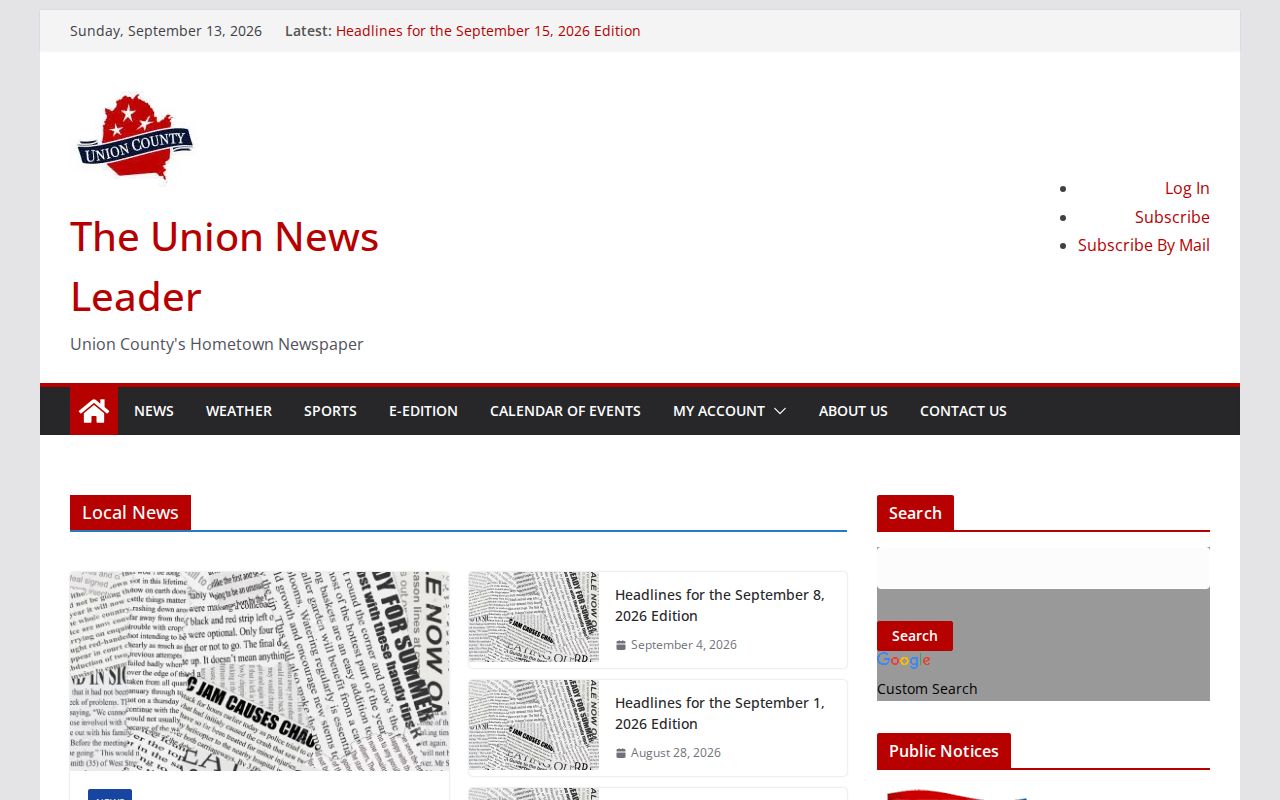
The News Leader shows the local publication route. Its dated historical PDFs establish the earlier weekly format. Broadcast stories add a different kind of help. WVLT or WYSH reporting can explain one investigation or Union County arrest in depth. A story is not a booking index. It may quote authorities and list charges for a single event while skipping unrelated arrests from the same week. The WVLT Union County arrest story shows how event-driven coverage works.
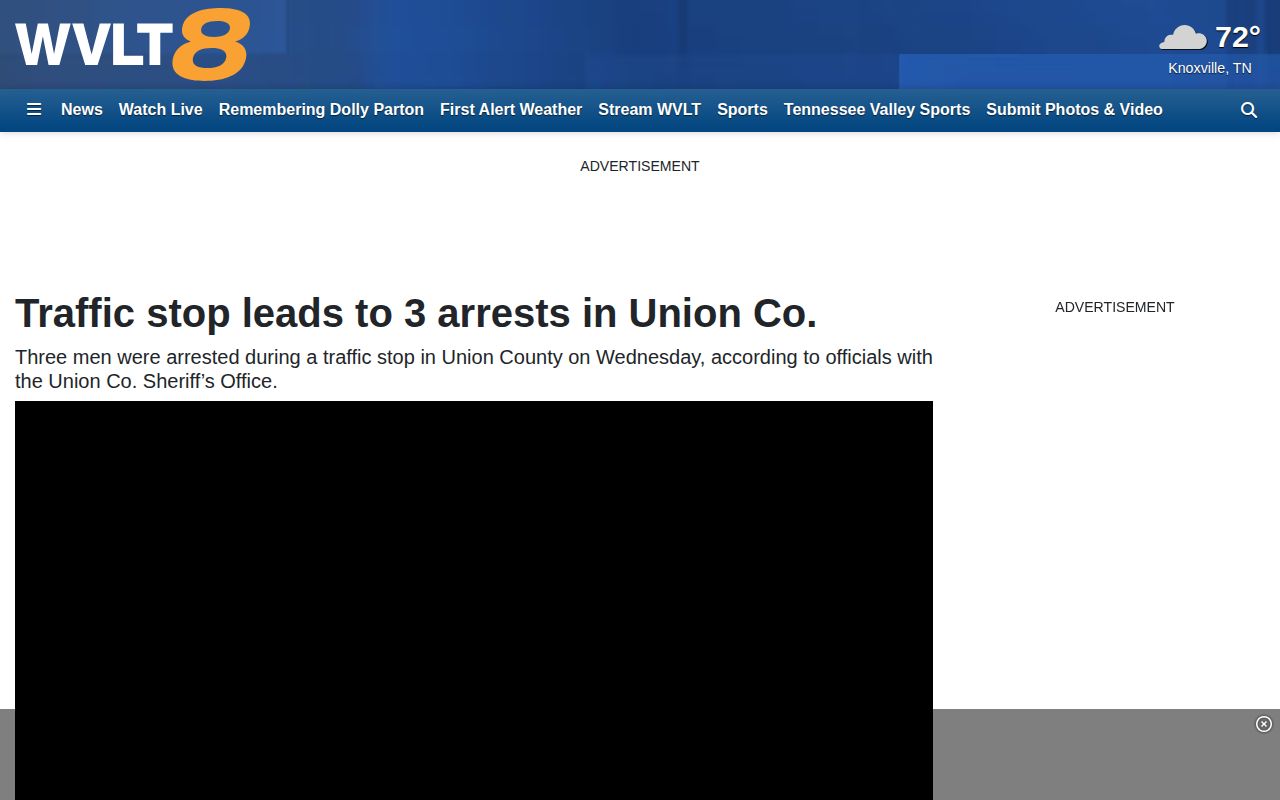
One story names an agency, not a countywide log.
Weekend Arrest Posting Limits
No official source states a weekend posting schedule. The sheriff runs no live feed. So there is no refresh interval to compare with the paper. Assume nothing about Monday postings. A booking can happen at any hour, while records staff, court filing, and newspaper production each follow their own pace. When the date sits near a weekend or holiday, widen the range and call the jail directly. Note the date and time of that call. Check more than one issue too. A publication cutoff can push an arrest into the next edition.
One weekly block cannot prove a "weekend surge." Published counts reflect the reporting window and access limits, not arrest patterns.
Older Union County Arrest Archives
Web visibility and record retention are two different things. Tennessee county guidance treats booking logs as a five-year category, inmate registers as permanent, and arrest case files and identification records as far longer. Inmate registers are permanent. Union County's adopted schedule controls the actual file. A missing newspaper issue does not mean the sheriff's arrest record was destroyed.
For older material, ask sheriff records for the booking or arrest file. Give an exact name and date range. The Circuit Court Clerk holds the later legal case. The Tennessee State Library and Archives keeps a Union County microfilm inventory spanning many historic court and county materials. That inventory lists no clearly identified modern jail-photo collection. Use TSLA only when the record fits. A precise request names the record type, person, approximate date, agency, and case or booking number. Asking for an existing jail register entry beats asking staff to compile a new historical arrest list.
Unofficial Union County Arrest Archives
Private arrest sites sit a rung below official channels. Their Union County coverage is thin. BustedNewspaper keeps a Tennessee page for the county, but its entries date to 2022. That is not a current blotter. Mugshots.com holds even older material from 2012 to 2015. TennesseeArrests.org offers a county page with no steady update pattern. RecentlyBooked leaves Union County out of its Tennessee directory entirely. The BustedNewspaper Union County page shows just how stale these archives can get.
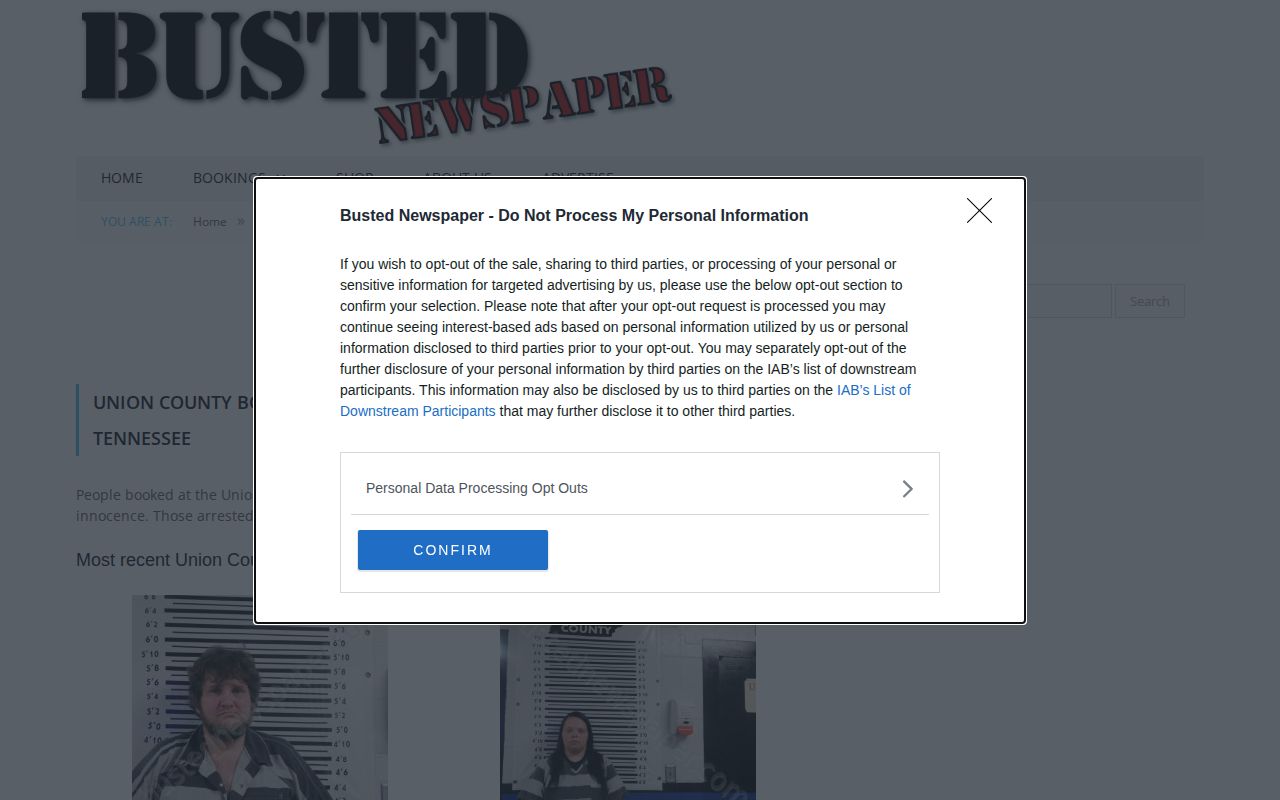
A page like that has limits. It cannot replace the sheriff's own booking records. It should never be treated as an authority on who sits in the Union County jail. Also watch the state line. Union County also exists in North Carolina and South Carolina, and mixing them up sends you chasing arrests from the wrong jurisdiction. Verify Tennessee, Maynardville, the agency name, and the record date first.
From Blotter to Court Disposition
A weekly arrest block only says who was booked. It tells you nothing about how a case ended. Union County General Sessions Court takes misdemeanors and holds preliminary felony hearings, and a felony can move up to Criminal Court after an indictment or bind-over. Union County criminal terms begin on the fourth Monday of January, May, and September. That schedule follows Eighth Judicial District rules.
For the real outcome, run the Union County case-information search and match the case number, filing date, agency, charge caption, hearing, and result. An empty result is common. Several things can hide a case. A new filing, a sealed matter, a juvenile case, a name variation, or a different court division can all do it. If nothing turns up, call the Circuit Court Clerk at 865-992-5493.
Arraignment comes first. That is where the charge is read and a plea entered. Disposition is the ending, whether dismissal, acquittal, plea, or conviction. A booking roster cannot tell you which way it went.
Request the Full Arrest Record
The sheriff's office posts no online request form and lists no booking-photo fee. Call records at 865-992-5212 and ask for the records custodian. The countywide Open Records Policy sets the routing. The Tennessee Public Records Act governs access with its exceptions. Viewing a record and copying it follow different rules. A copy request may need a written ask, photo ID, and a cost estimate.
Be specific in what you request. Ask for the booking record and any arrest report the office holds. Include release or transfer details. Add the booking photograph if it can be released. The arresting agency often keeps the incident report. The jail keeps intake and custody records. A city arrest may mean requests to both offices.
Note: Keep any denial in writing and ask for its statutory basis. A dead link or a missing newspaper item is not an official denial.
Public Record Search
Sponsored Results